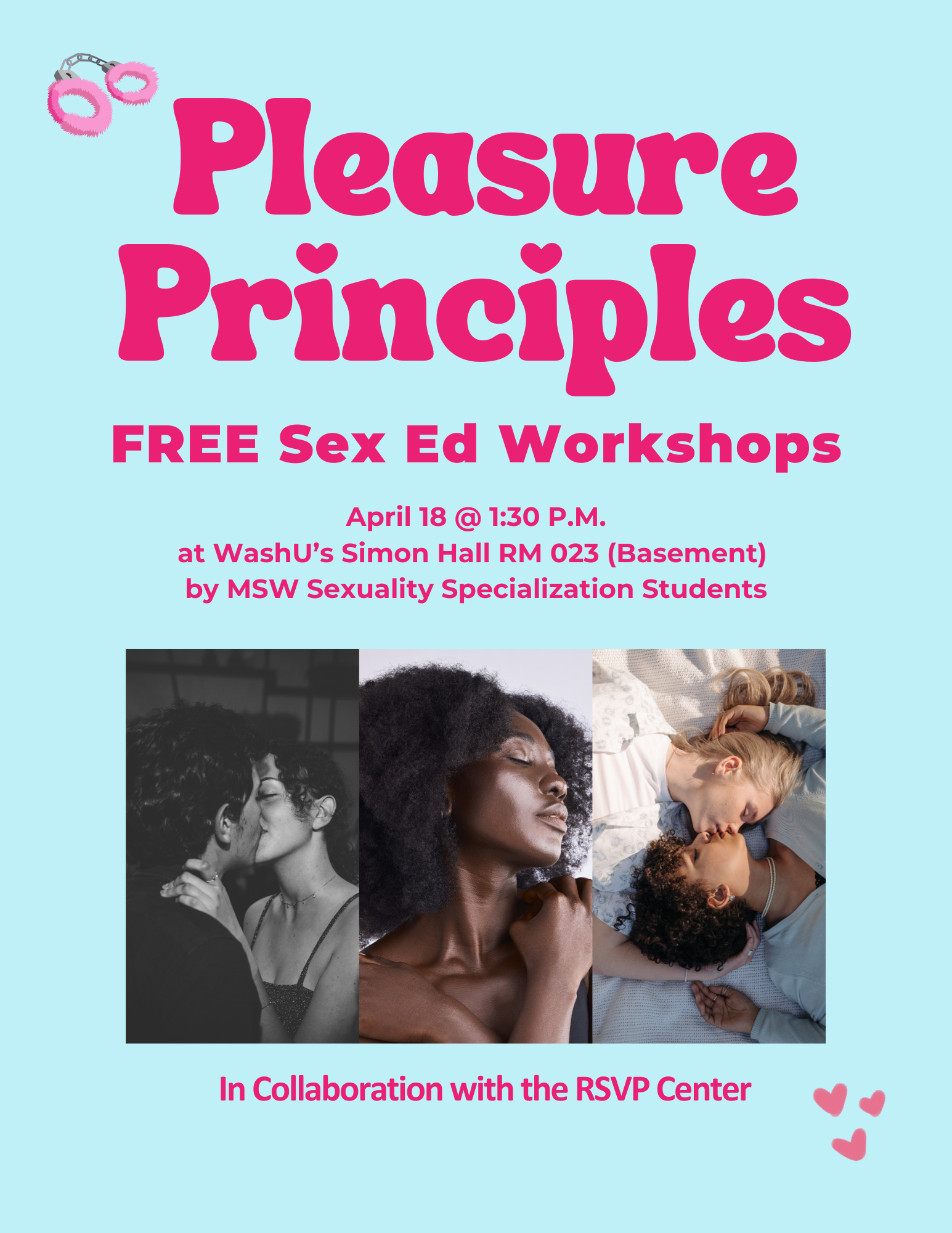
Sex education that centers your pleasure, freedom, and healing.
Workshops
Pleasure Principles is a student-led sexual health education series created by Brown School of Social Work students in the Sexual Health Specialization, in collaboration with WashU’s RSVP Center.
Each year, graduate students design and facilitate interactive workshops that build sexual health knowledge, relational skills, and embodied awareness for WashU students and the broader St. Louis community. Learn more about this year’s workshops:
-
Have you ever wanted to share a sexual fantasy but talked yourself out of it? Needed a water break during sex but powered through so you wouldn’t “kill the mood”? Felt bored or craved something different but had no idea how to say it?
You’re not alone. Talking about sex with a partner can feel way harder than actually having it. When it comes to asking for what you want in the bedroom or giving your partner feedback, many of us were never taught to have these conversations. Whether you’re afraid of rejection, worried about making it awkward, or just wish your partner could read your mind, we’ve got your back! This workshop is designed to help you feel more confident and secure communicating about sex with your partners before, during, and after sex. Together, we’ll explore what holds us back from these conversations and practice skills for direct communication, giving feedback, and more that can be used both inside and outside the bedroom.
-
Have you ever felt weird about telling someone no? Curious about how your upbringing informs the ways you navigate relationships? Maybe you wanna know how these things connect? If the answer is yes, then this event is for you!
Think about times in your life in which power imbalance and/or how social identities made holding/setting boundaries or talking about consent awkward or tense. Through this workshop, we will examine how systems of oppression (i.e., white supremacy, heteropatriarchy, and purity culture) influence relational expectations, as well as our sexual beliefs. We want to name how our relationships and engagement in consent include these power dynamics. Along with naming this, we will learn to practice active communication skills, set boundaries, and negotiate while staying aware of how power/privilege impacts us and our relationships. By upending these belief systems and making consent a part of our day-to-day interactions, we can deepen relationships with ourselves, our loved ones, and our community.
Your Facilitators

Sarah (she/her)
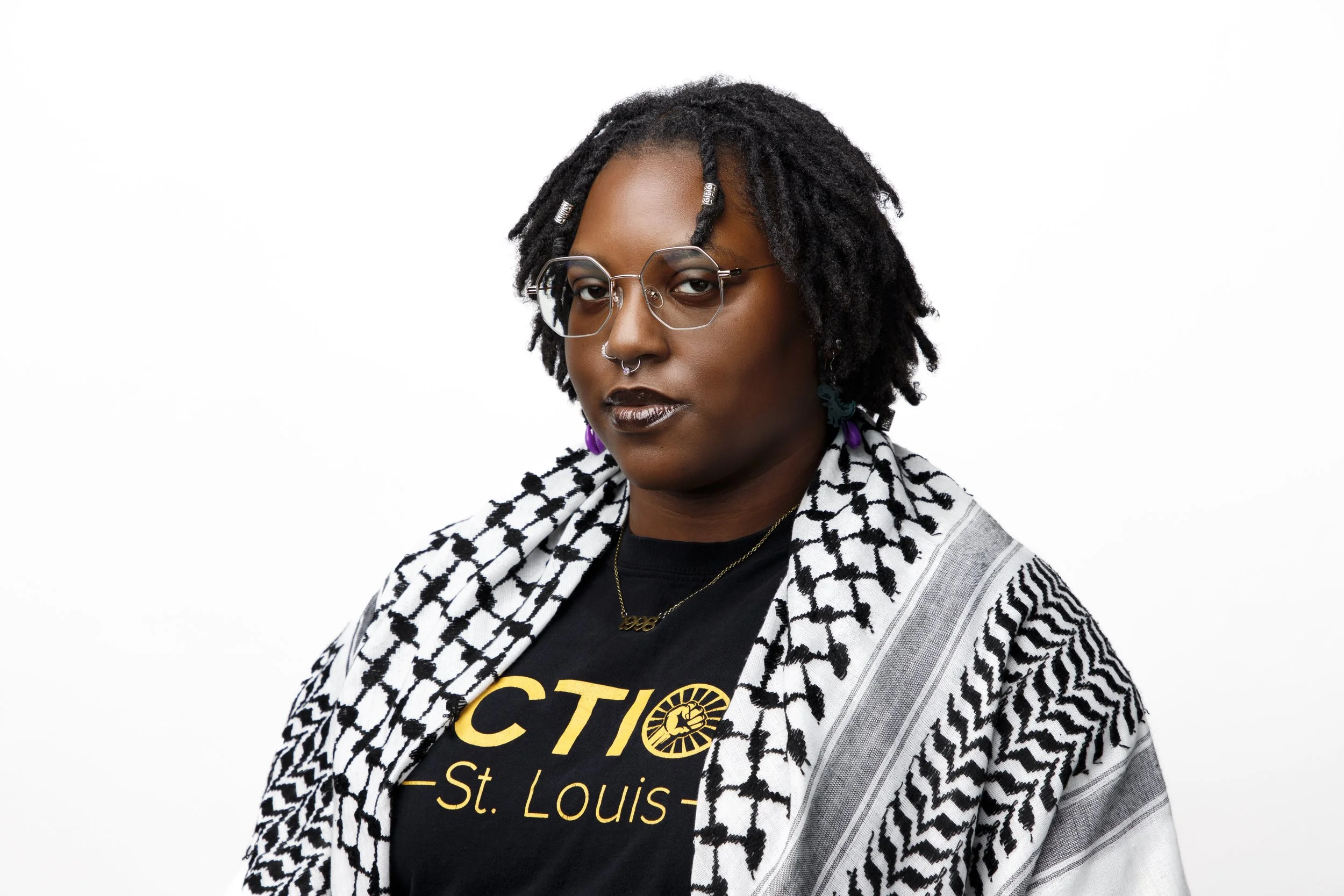
Jada (they/them)
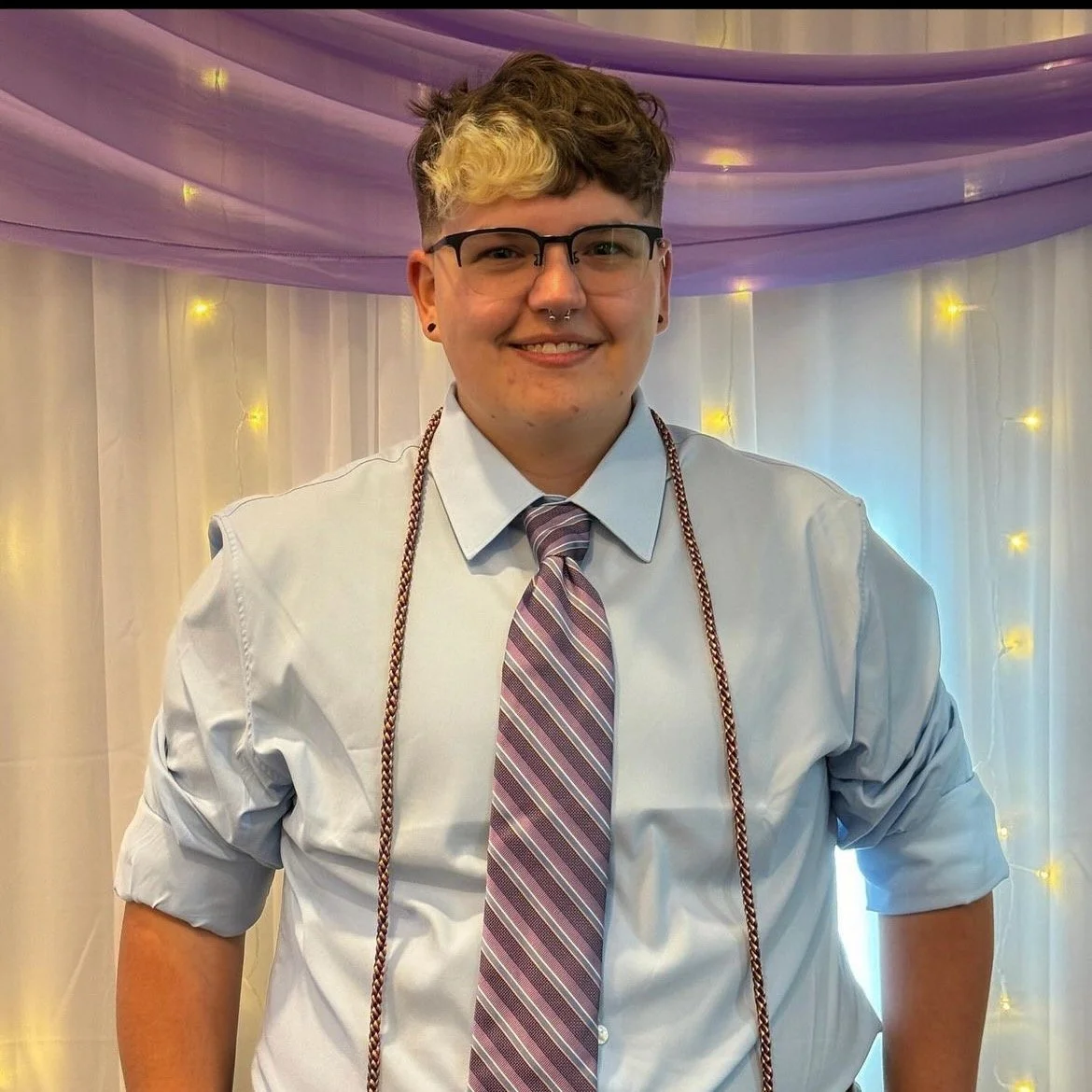
Bailey (they/them)
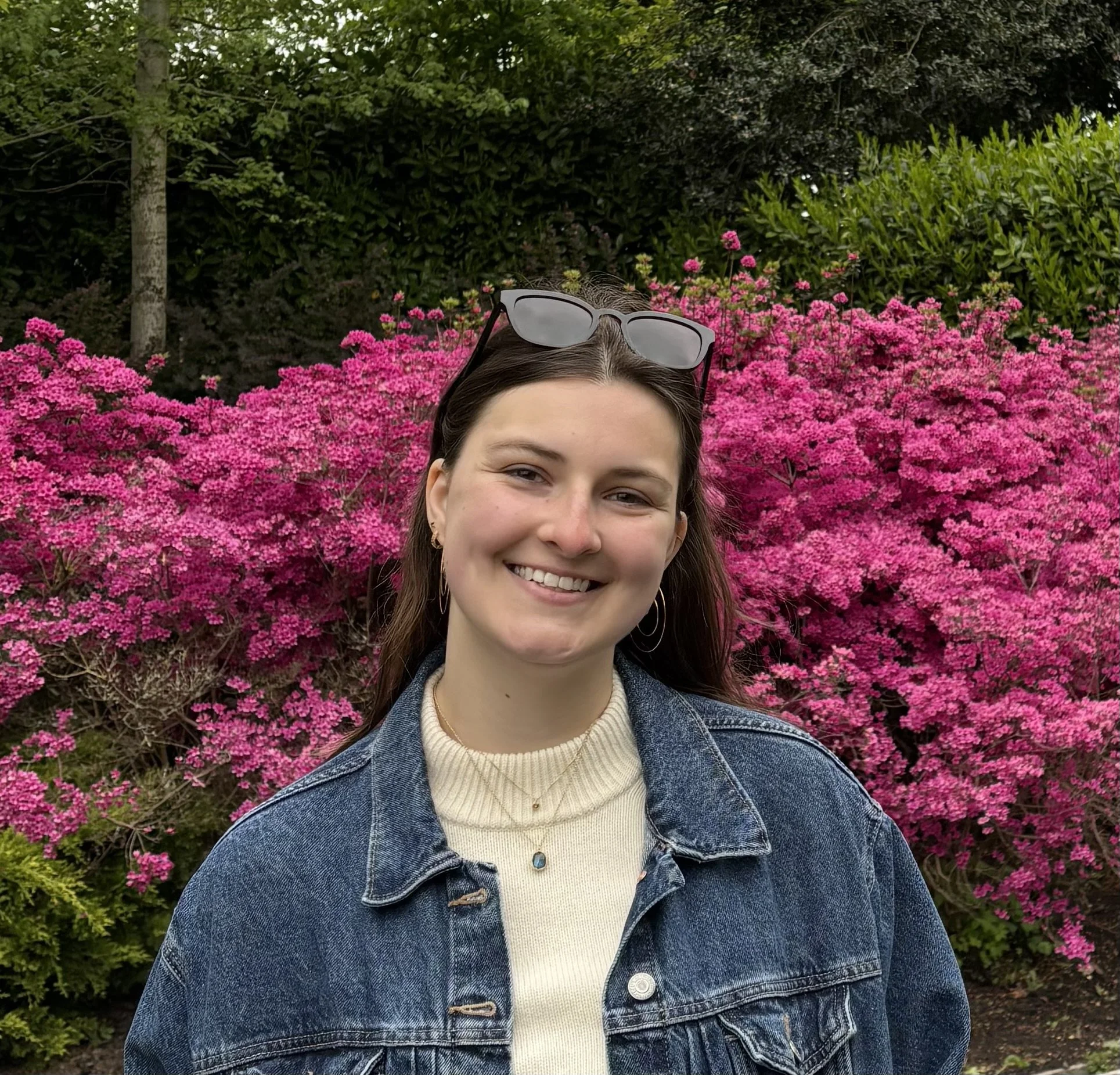
Sara (she/her)

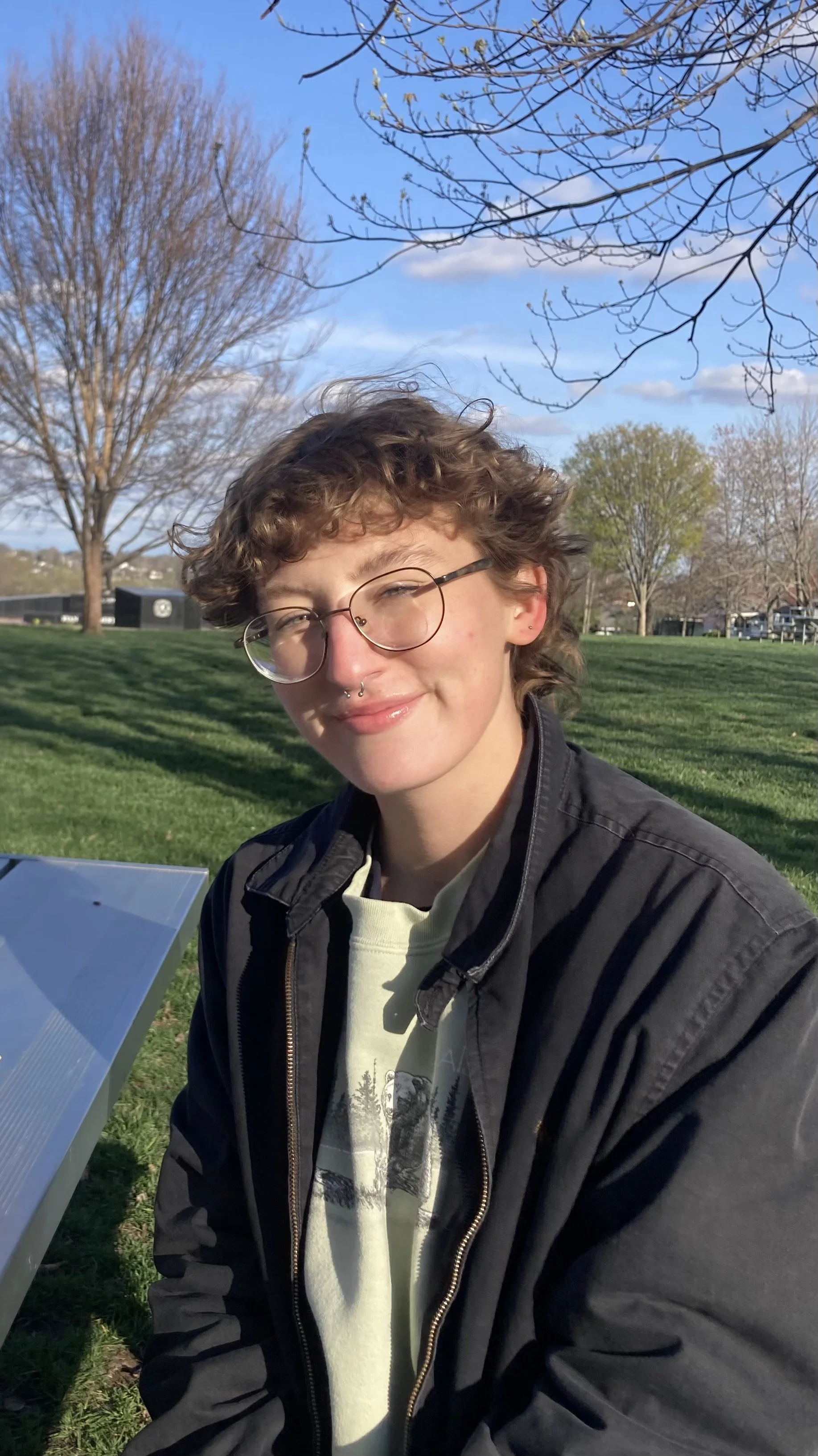
Lex (they/them)
Dalychia (she/her)
Our Professor